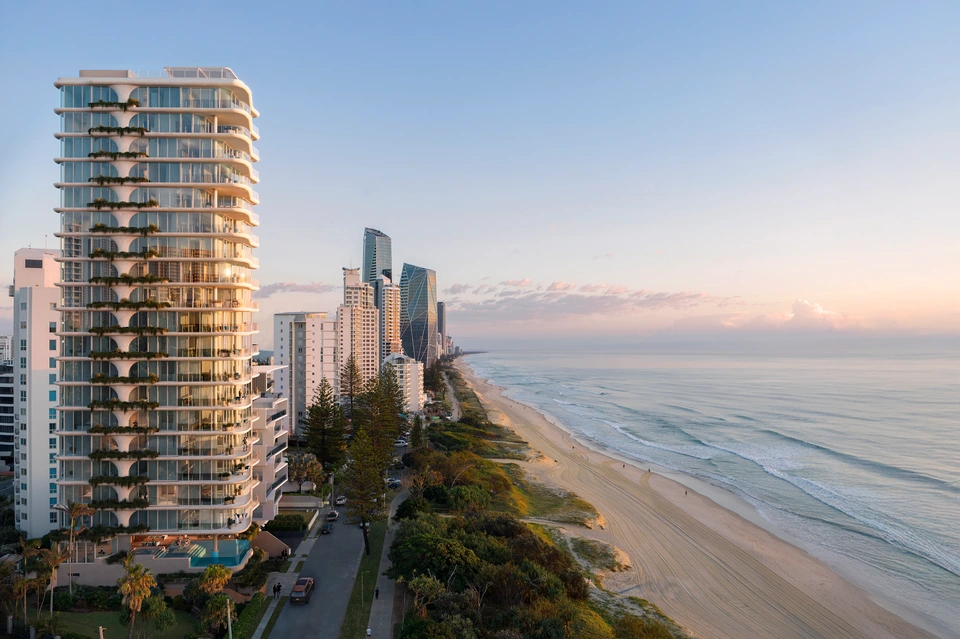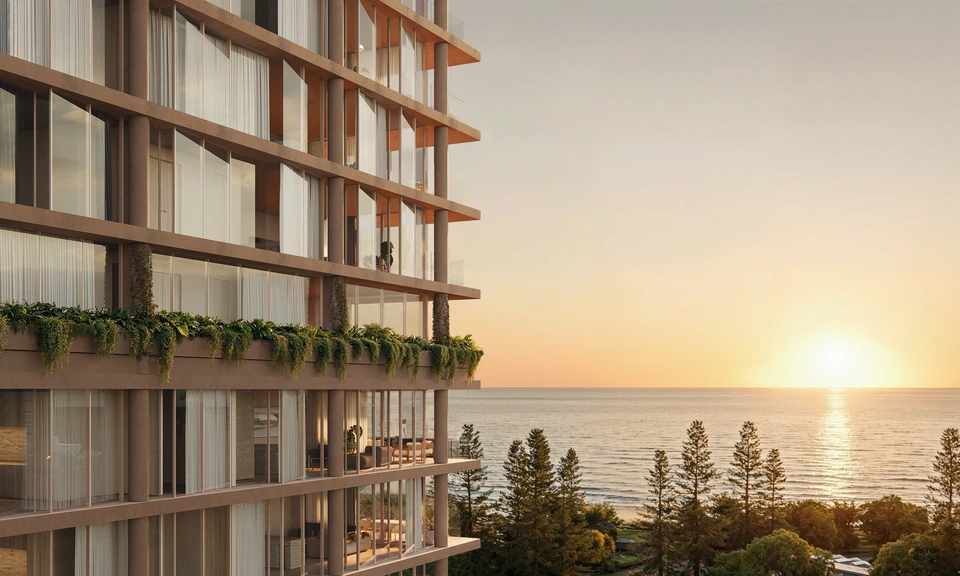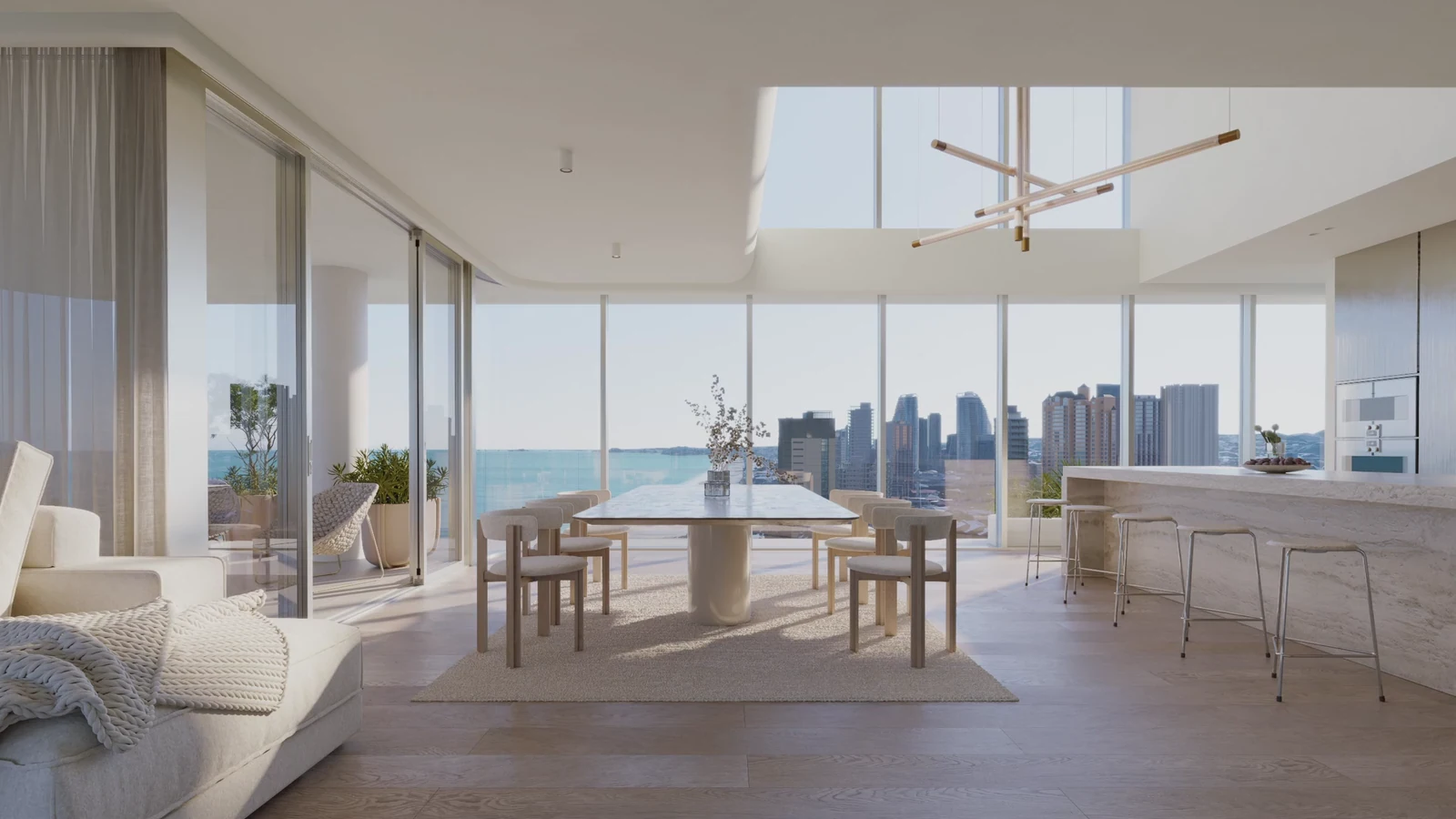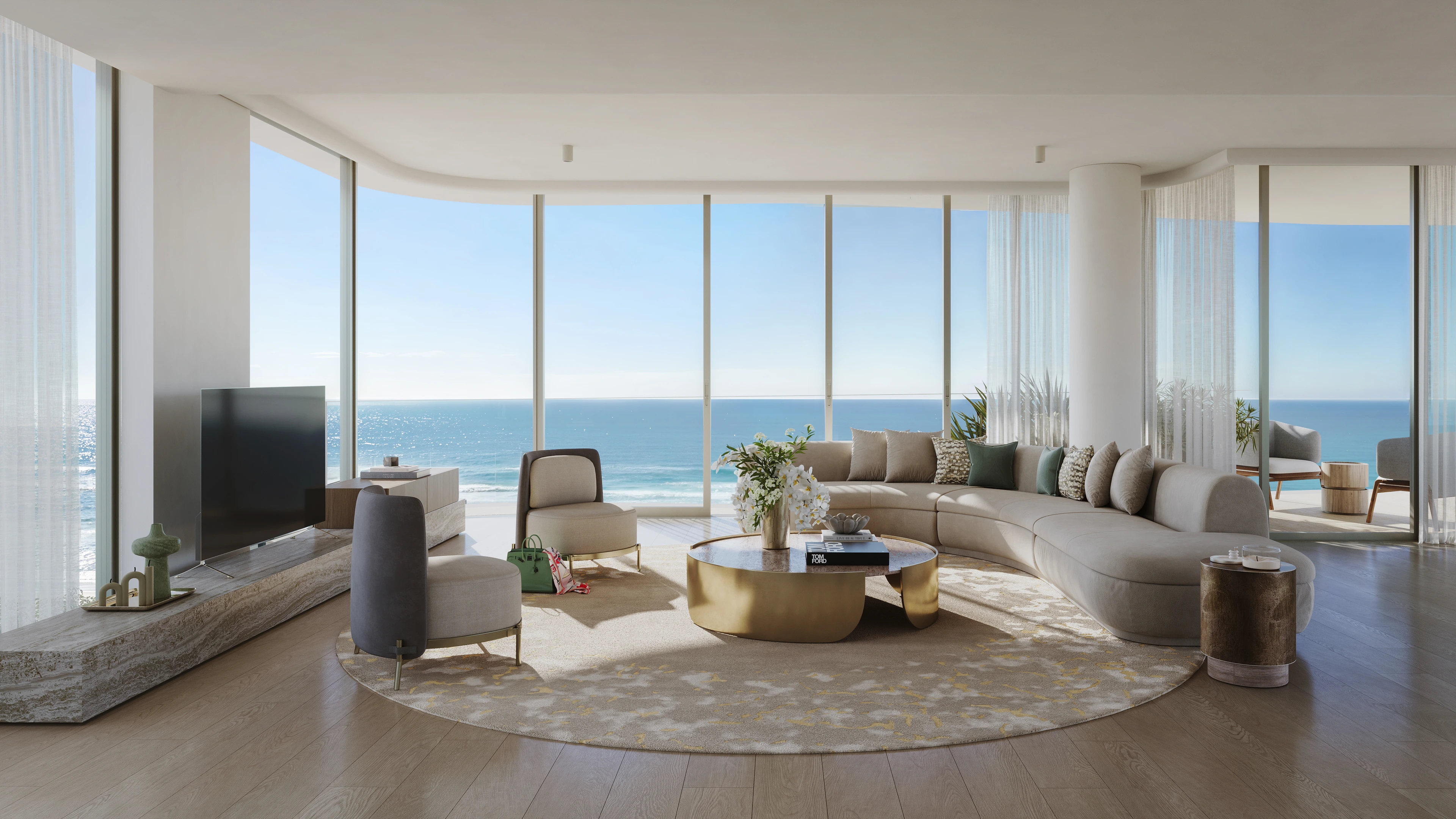
A launch film gives buyers a way to experience a development before the doors open. Decide what someone should remember after watching it. That might be the first view of the water, the sequence from lobby to residence or the light in a private penthouse.
Give the project film a clear route
Introduce the address, orient the viewer and follow a deliberate path through the development. An exterior shot can tell us where we are. A transition through the arrival or lobby gives the scale a human reference. Keep the number of spaces in check so each one has enough time to register.
Decide whether the penthouse needs its own film
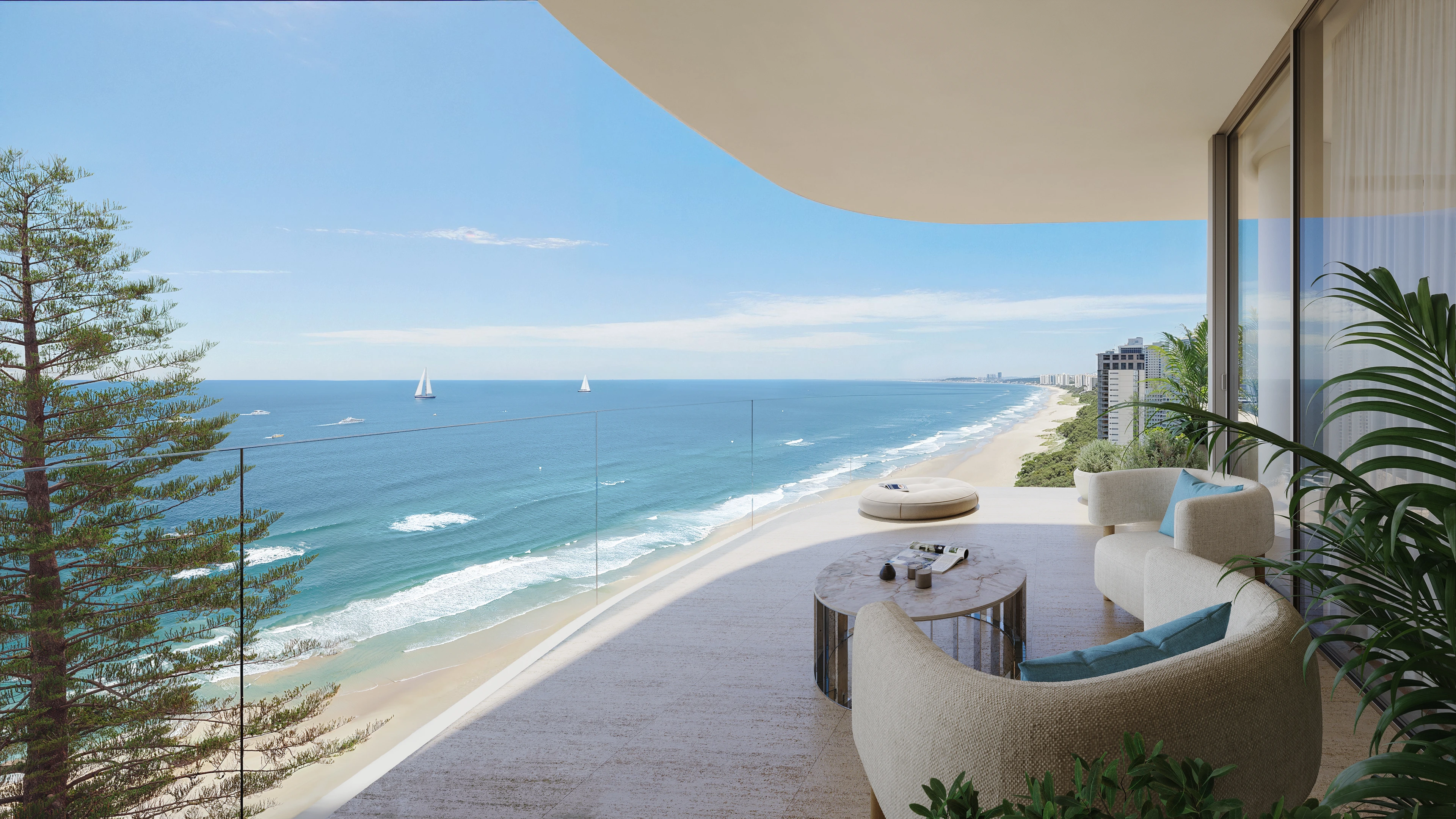
If a residence has a distinct campaign, audience or material palette, give it a separate edit. For No. 21 Broadbeach Boulevard, the project film presents the wider development, while the penthouse film concentrates on the outlook and experience of an individual home.
Review timing before the final renders
Use a storyboard and then an animatic to judge pace, camera movement and how shots connect. After that, review the look, grade and sound design. If the film will play without audio in a display suite or on a mobile landing page, make sure it still reads clearly.
Specify the cutdowns and opening frames
Agree the formats and runtimes with the media team before production. A vertical edit needs room for the architecture, text and platform interface. Choose the opening shot and the closing action for each placement, and provide a still for visitors who prefer to start playback themselves.
Keep it tied to the wider campaign
Use the same architectural model, key materials and visual direction for stills and motion. Review film shots and brochure views together while it is still possible to correct a finish or change how a room is represented.
Brief the horizontal master and vertical cuts together
Use the Broadbeach films to compare a general project sequence with a dedicated penthouse edit. The Camilla film offers a different example. Let light, material and the connection to the coast carry the sequence. Carr’s project profile gives the architecture and interior context for Camilla.
- Write the first three seconds of each version. Give the opening frame enough information to work in a silent feed.
- Agree which scenes belong in the master, display-suite loop and vertical edits. Review separate crops around faces, architecture and captions.
- Confirm the captions, playback settings and audio rights with the team that will publish the film.
Use the off-the-plan launch checklist to align film production with stills and the sales team’s handover.