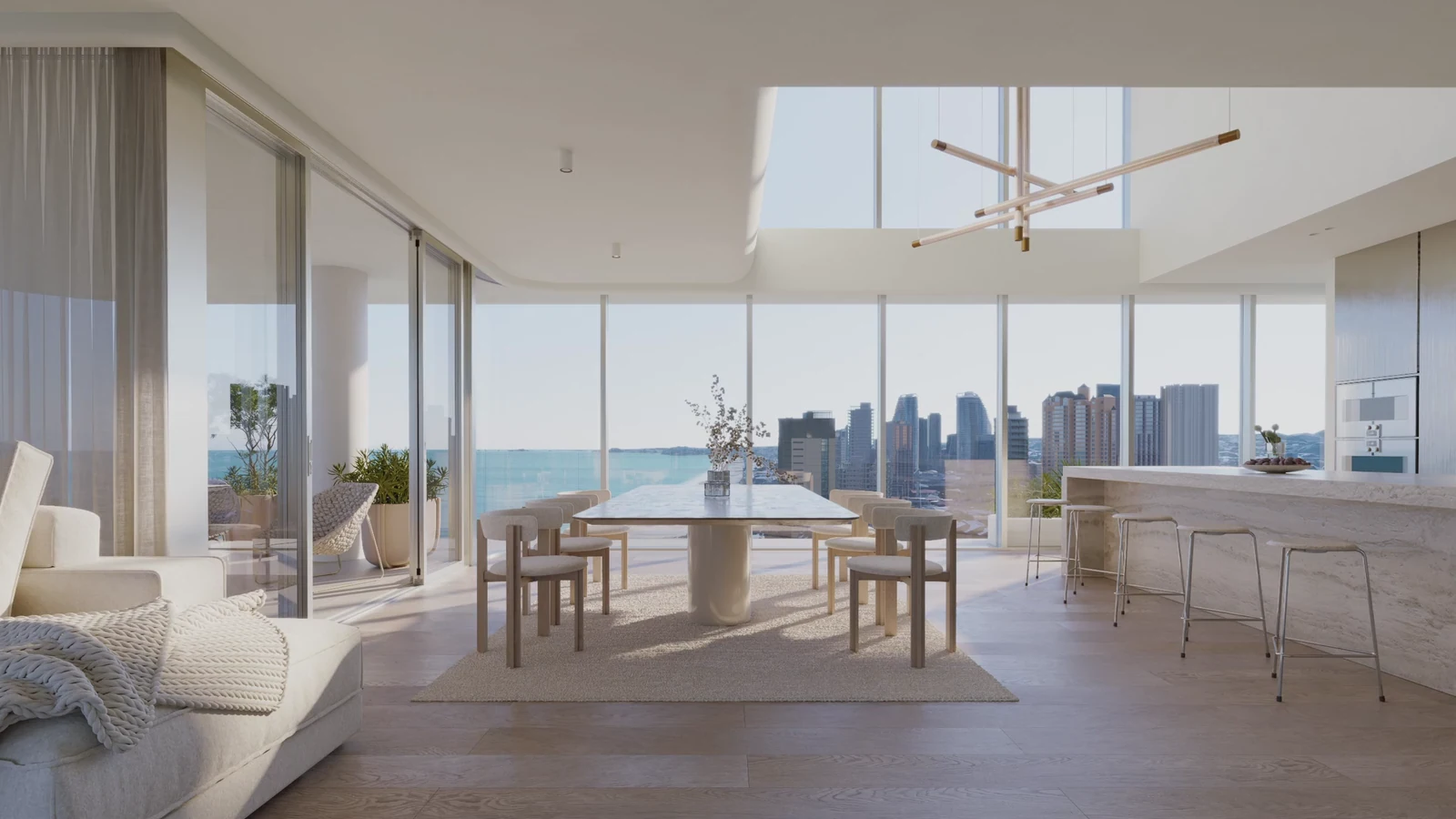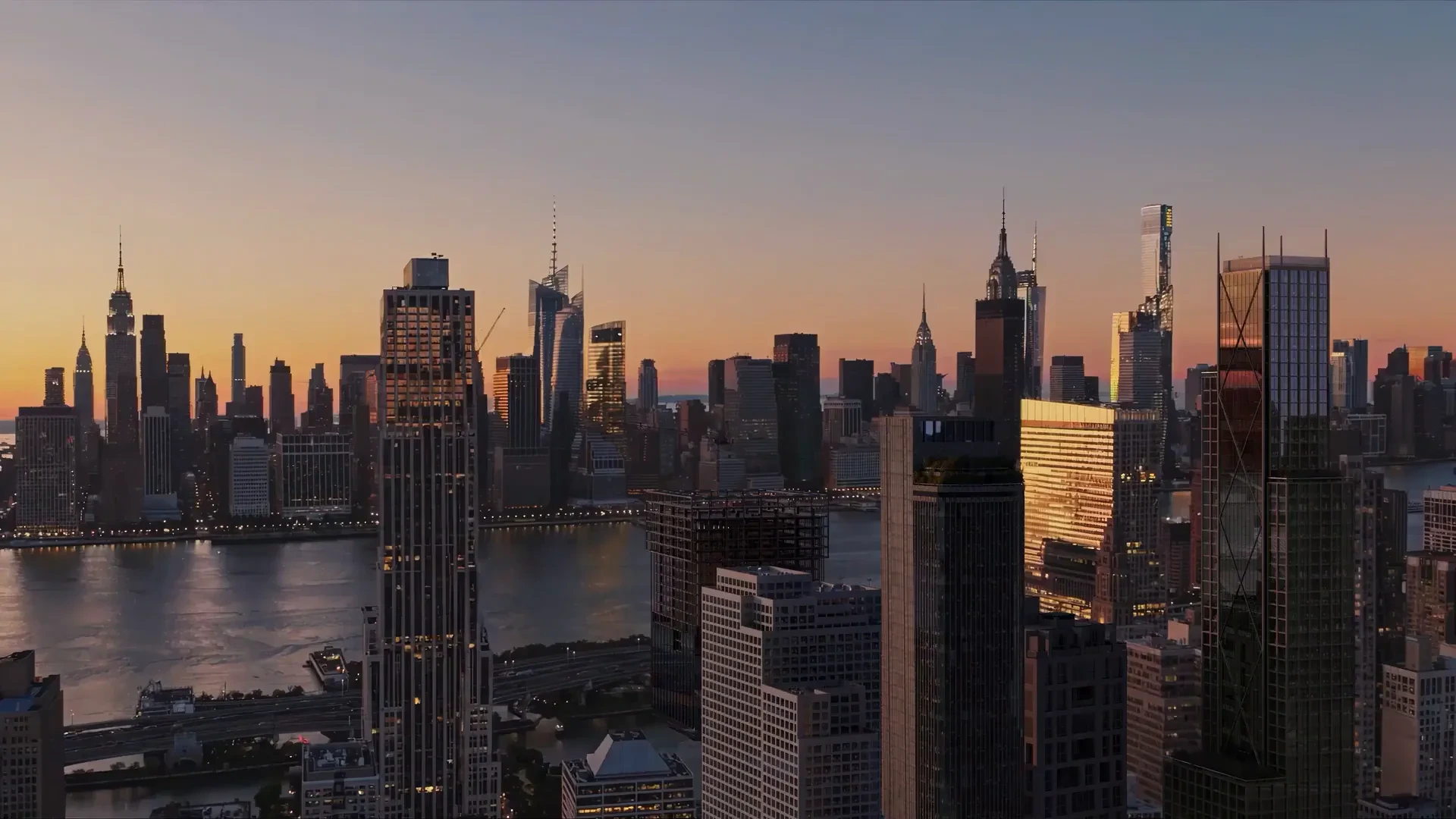
In HISM’s Kinko Tower case study, the skyline gives the viewer a way to read the height and position of the proposal. Residence views then let the viewer read the same location from inside a home. Use those two scales to give each camera a distinct purpose.
Establish the address before the skyline reveal
Choose a view that places the tower relative to its near neighbours. Use site coordinates and orientation to agree on trustworthy background references. Reserve an elevated view for explaining the silhouette, setbacks or terraces that a street-level frame cannot show.
Carry the same outlook into interiors and film
Set the floor level and approximate eye height for each interior. In the Kinko Tower film, changing camera height helps link the building with the city around it. Match the dominant landmarks and light direction where still and film show the same room.
Set the context for every camera
- Confirm the site origin and surrounding geometry.
- Attach an agreed reference to each camera and state how the image will be used.
- Mark any provisional nearby development in review notes before approving the background.